




Company News
On October 6, 2026, the Royal Swedish Academy of Sciences announced that the Nobel Prize in Physics was awarded to Francis Halzen in recognition of his decisive contributions to the IceCube Neutrino Observatory (IceCube). Using this facility, he discovered high-energy neutrinos originating from astrophysical sources, unveiling the mysteries of these high-energy cosmic “ghost particles”.
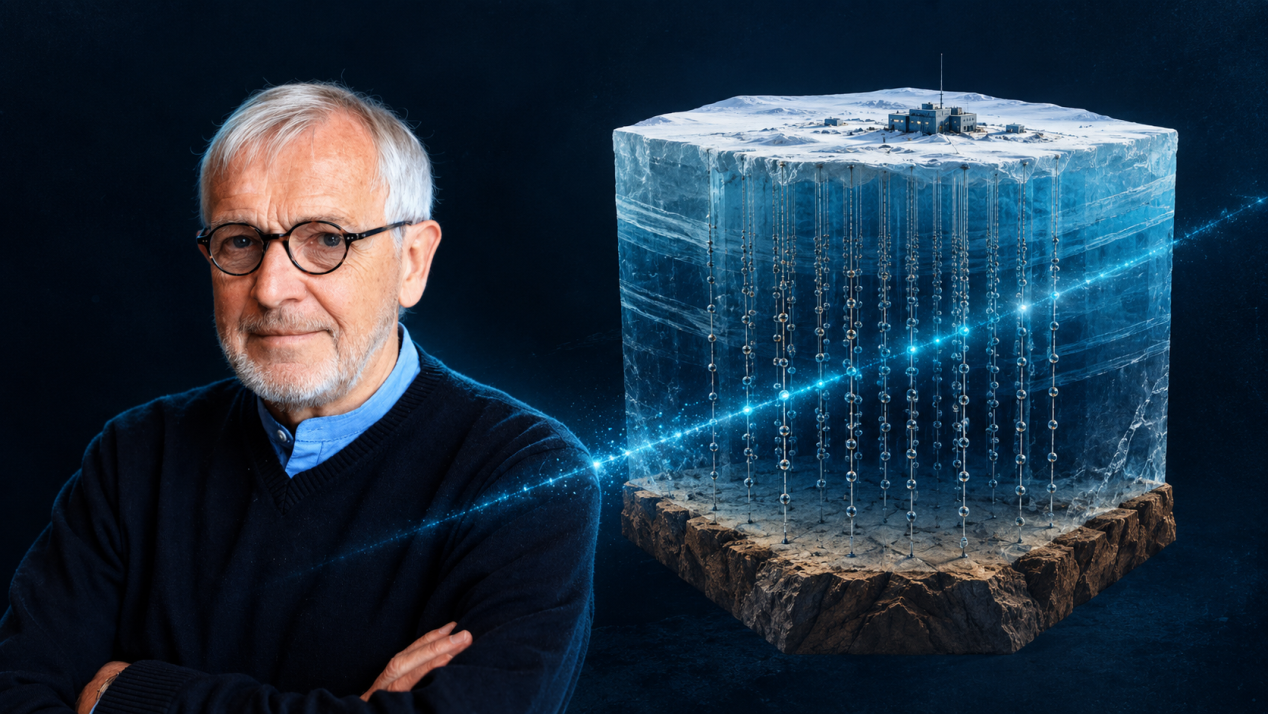
Physicist Francis Halzen (Source: Deep Tech)
For this landmark breakthrough in fundamental physics, Hamamatsu Group developed high-sensitivity photomultiplier tubes (PMTs) specifically for the project. Serving as the core detection components of IceCube, these PMTs are deployed thousands of meters beneath the Antarctic ice sheet, delivering critical sensing capability to detect faint Cherenkov light produced by neutrinos.
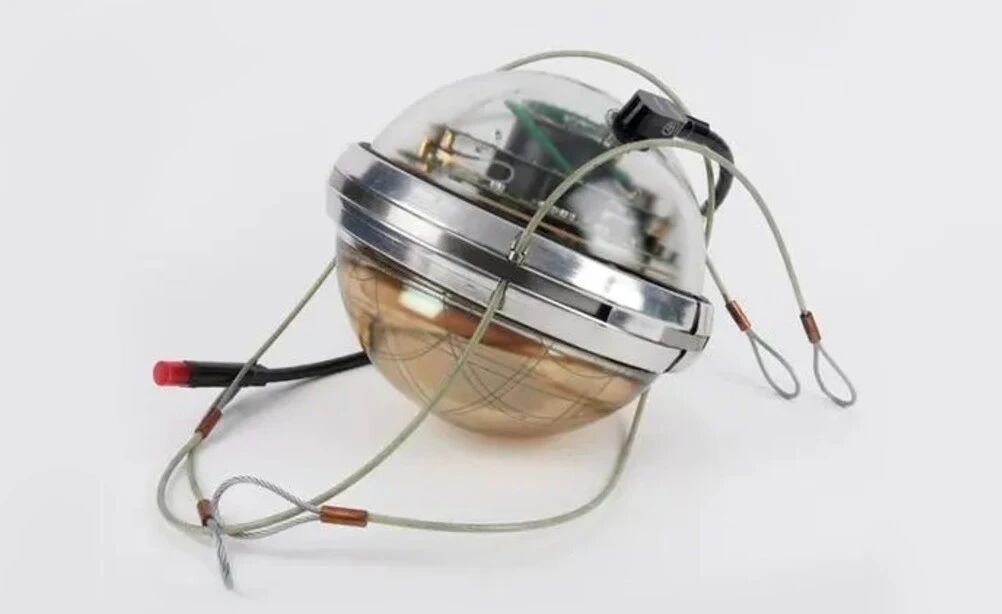
IceCube Digital Optical Module (Source: https://icecube.wisc.edu)
IceCube is located at the Amundsen-Scott South Pole Station in Antarctica. It features a total of 86 detection strings, each carrying 60 optical modules, deployed between 1,450 meters and 2,450 meters below the ice surface. Each module is a pressure-resistant glass sphere housing a PMT and digital circuitry, utilizing one cubic kilometer of Antarctic ice as the detection medium. When a neutrino interacts with an atomic nucleus within the ice, the resulting high-speed charged particles emit extremely faint pale-blue Cherenkov flashes. These optical signals are exceedingly weak, requiring high-performance PMTs to act as the “eyes” of the detector and capture incoming photons.
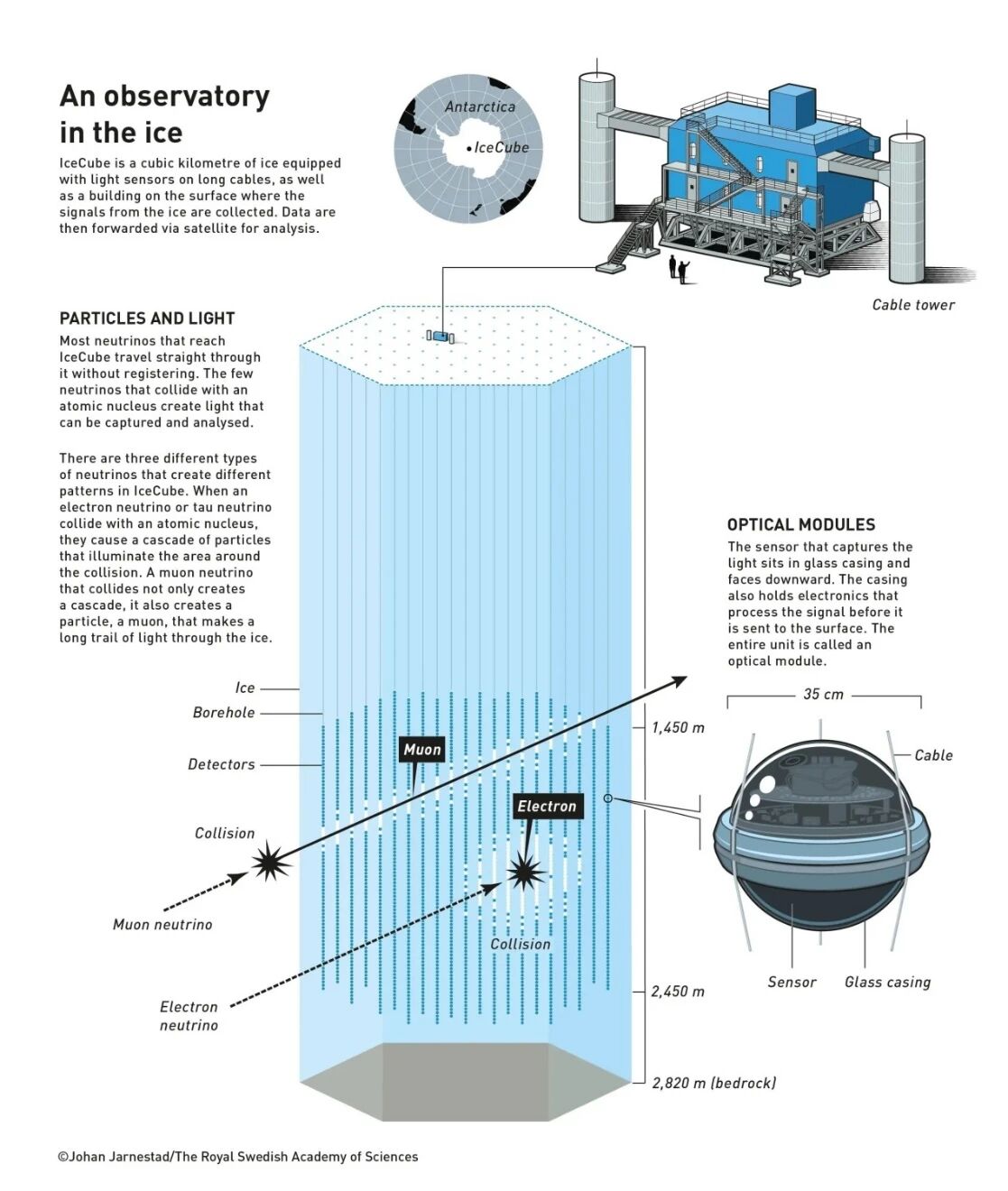
IceCube structural diagram (Source: The Royal Swedish Academy of Sciences)
We are honored that BHP was tasked with manufacturing the 3-inch PMTs for the IceCube Upgrade. BHP completed a full suite of validations covering production, testing, sensitivity, stability, reliability and environmental adaptability, with deliveries fulfilled in 2020. These PMTs operate stably year-round deep within the Antarctic ice, supporting the deployment and data-taking of the upgraded IceCube array.
IceCube’s Nobel-winning discovery of high-energy astrophysical neutrinos represents the fruit of long-term collaboration among world-leading physicists and engineers. As a specialized supplier of optoelectronic detection components, Hamamatsu Group is proud to take part once again in building this cutting-edge international high-energy physics facility, reliably capturing neutrino signals from distant celestial objects.
Going forward, Hamamatsu Group will continue to deliver high-performance optoelectronic detection solutions to support exploration with frontier large scientific facilities. With optoelectronic devices as its eyes, the group will help unlock the unknown mysteries of the vast universe.
References:
https://hep.hamamatsu.com/us/en/type-of-experiment/deep-underground-and-underwater-detector.html
https://mp.weixin.qq.com/s/8tFM1hV_Bqzp2M6pRlIRKA


Product: (86)-316-5970168/166/165
Other: (86)-10-63706370
E-mail: sctj@bhphoton.com


