



Supports
With the development of PMT applications, the requirements for PMT are becoming more and more strict. This requires a large number of parameters to characterize its unique performance. One type of PMT is unlikely to be optimal for any application. Therefore, understanding the features of the PMT allows for a more accurate selection of the product model that is appropriate for its application.
Essential Performance
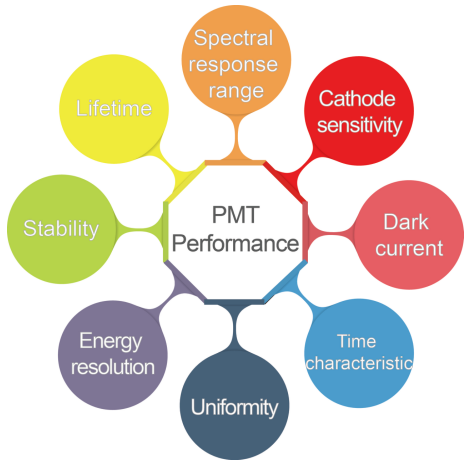
For the PMT, spectral response range, cathode and anode sensitivity, dark current (noise) are all the basic properties of the PMT. The spectral response range can be understood as the range at which the PMT can detect the wavelength of the optical signal. For example: The solar-blind PMT can detect the optical signal in the ultraviolet band, the bibase PMT can detect the optical signal in the visible band, and the polybase PMT can detect the optical signal in the infrared band or even wider range. [For more information, see PMT Basic Part III: Basic selection method]
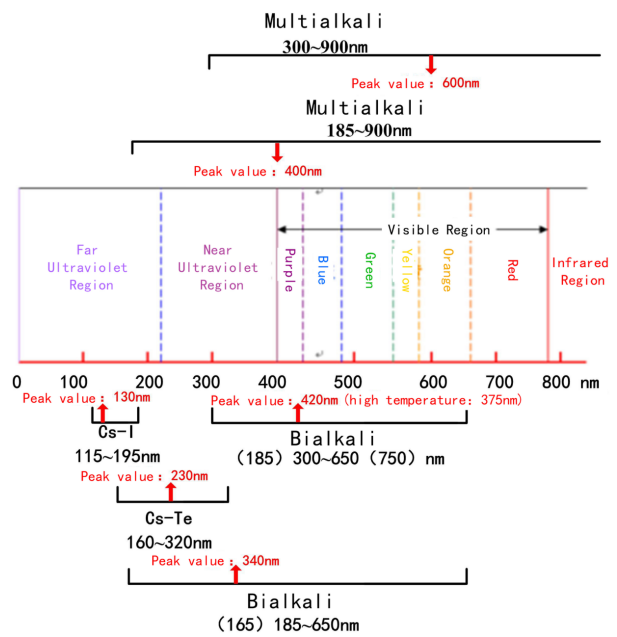
Fig. 1 Spectral response range
The light sensitivity reflects the sensitivity of the PMT to light signal under certain light source and high voltage. The cathode sensitivity indicates the ability of photoelectric surface to convert optical signal into photoelectron. The anode sensitivity reflects the ability of output signal when the photoelectron after doubling reaches the anode. The ratio of anode sensitivity to cathode sensitivity is the amplification factor of the PMT (also called: gain).
Dark current refers to the current value output by the PMT without incident light. In general, the magnitude of dark current (noise) is not only related to the product, but also closely related to the temperature and humidity, high voltage and light protection during the use of the PMT.
Therefore, for each PMT, the sensitivity, gain and dark current are all related to the operating voltage of the PMT.
Time characteristic
The PMT is a photodetector with a very fast time response. The time characteristic is mainly determined by the PMT multiplication structure. It also relates to the operating voltage. If the high voltage of power supply is increased, the strength of the electric field will be increased, and the electrons will fly faster, which can shorten the time response of PMT.
The rise time, transit time and transit time jitter are usually used to characterize the time characteristics of the PMT.
✔ The rise time is the time when the output pulse height value reaches 90% from 10%;
✔ The transit time is the time from the incident light incident on the photocathode surface to the appearance of the output pulse;
✔ Transit time jitter refers to the fluctuation of the transit time of all individual photoelectron pulses as it impinges on the photocathode surface.
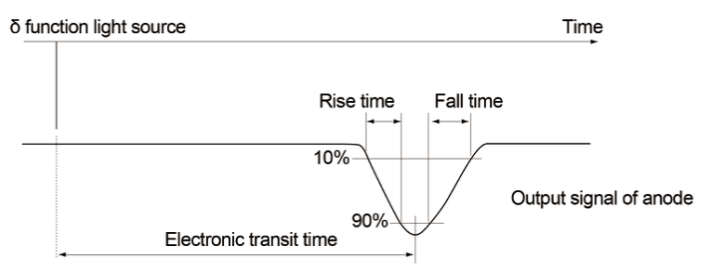
Fig. 2 Electronic transit time
Uniformity
The sensitivity of the PMT varies with the exposure position of the photocathode. The uniformity of the cathode is usually used to characterize the inconsistency of photoelectric surface sensitivity. In the application process, the optical signal is usually focused on the geometric center of the photoelectric surface, regardless of the point light source or the surface light source. In general, the uniformity of the head-on PMT is better than that of the side-on PMT.
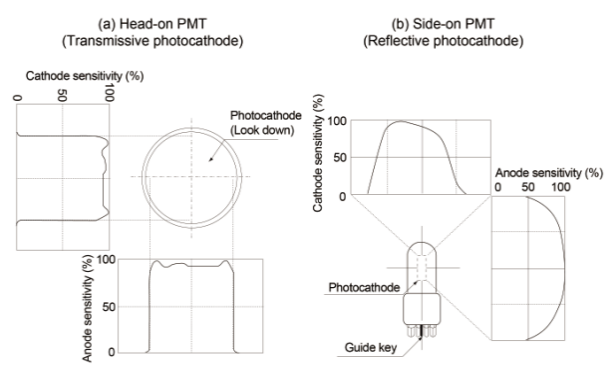
Fig. 3 Uniformity
Energy resolution
nergy resolution is the ability of the PMT to resolve different energy peaks in the scintillation counting application. Energy resolution can be approximated as the minimum accuracy of resolution. The smaller the energy resolution, the stronger the ability to distinguish different energy peaks.
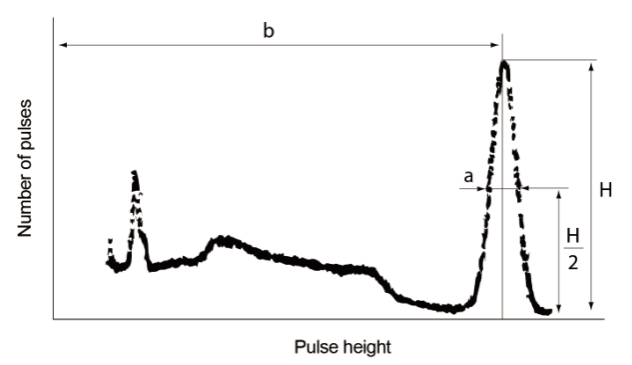
Fig. 4 Energy resolution
Note: Energy resolution is the ratio of the width at half of the height of the peak a to the peak amplitude b, expressed as a percentage.
The factors affecting the energy resolution are related to not only the collection efficiency and quantum efficiency of the photocathode surface of the PMT, but also the luminous efficiency and the intrinsic resolution of the scintillator. Therefore, when referring to the PMT energy resolution, it is necessary to specify the type of scintillator and ray source tested.
Stability and lifetime
The output change characteristic of the PMT with time is called drift characteristic or lifetime characteristic. The phenomenon that this change deteriorates due to the direct influence of voltage, current, temperature, etc. is called fatigue.
Stability can also be understood as the short-time variation characteristic of the PMT, i.e. the stability degree of the output under operating conditions. In general, the PMT can obtain stable signal output after 30 minutes of operation. Therefore, “30-minute warm-up” is necessary for applications requiring high stability or comparison of test data.
Tips: If the PMT is required to continue working after a short period of power failure, no need to warm up again.
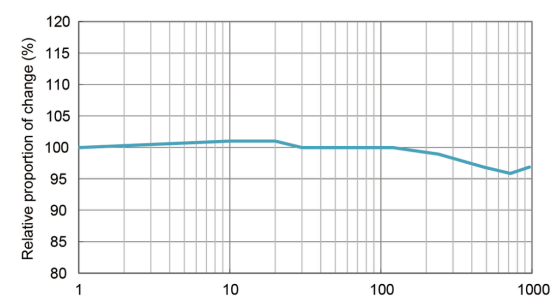
Fig. 5 Example of CR332 stability
The lifetime characteristic is defined as the output change characteristic of the PMT over a long period of 103 to 104 hours. The service life of the PMT is directly related to the intensity of probe light and high voltage. Based on long-term continuous test data, under extreme service conditions (ambient temperature: 25°C, 1000V, 100μA anode output current), the service life of the conventional PMT is more than 1000 hours. If the output current is much less than 100μA during the actual application, or if it does not work continuously for a long time, the service life of the PMT can be greatly extended.
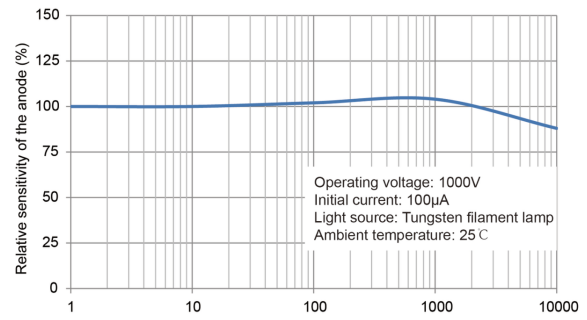
Fig. 6 Long time variation characteristic (Lifetime)
There are neither two identical leaves, nor two identical PMTs. Therefore, only by a deeply understanding of the working principle and performance of the PMT, we can turn its “individuality” into “generality”.


Product: (86)-316-5970168/166/165
Other: (86)-10-63706370
E-mail: sctj@bhphoton.com