



Supports
1. Thermal Stress of Glass
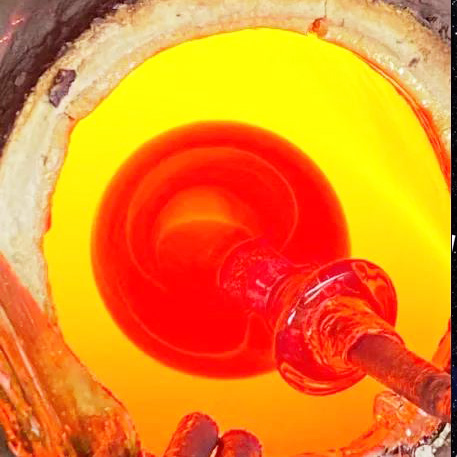
Thermal stress refers to the stress arising from temperature difference in the process of the glass forming or hot working (as shown in Fig. 1). Thermal stress can be classified into temporary thermal stress and permanent thermal stress based on characteristics.
(1) Temporary thermal stress
When the glass temperature is lower than the strain point, glass is within the elastic deformation temperature range (brittle state). The thermal stress arising from the uneven temperature variation exists with the temperature gradient and disappears with the temperature gradient. This type of thermal stress is known as the temporary thermal stress.
(2) Permanent thermal stress
When the glass temperature gradient disappears (both surface and internal temperatures of glass are equal to room temperature), the residual thermal stress is named as permanent thermal stress and also called internal thermal stress. The permanent thermal stress of glass only can be relieved or attenuated by means of annealing.

Fig.1 Thermal stress before glass annealing
Note: Different colors are determined by the optical path difference, indicating different stresses. For example, yellow and yellow green represent tensile stress, while red and orange yellow represent compressive stress. Testing equipment: stress gauge.
2. Annealing Principle and Annealing Temperature of Glass
Glass annealing refers to a process of reheating glass products with permanent thermal stress to a temperature at which the internal particles of the glass can move and eliminating or attenuating the permanent thermal stress by means of the thermal stress dispersion due to particles displacement (known as thermal stress relaxation). The thermal stress relaxation rate depends on the glass temperature. The higher the temperature is, the faster the relaxation rate is. Hence, a proper temperature range for annealing is crucial for good annealing quality for glass.
Glass has no fixed melting point. Glass cools down from high temperature after it passes a temperature range in which glass transforms from a typical liquid to a brittle solid. This temperature range is named as the transformation temperature range. The upper limit of this temperature range is known as the softening temperature Ts (η=107.6 dPa·s), while the lower limit of this temperature range is the transformation temperature Tg (η=1013.4dPa·s).
Within the temperature range (below Tg), particles displacement in glass goes on, to eliminate thermal stress and structural heterogeneity of the glass. The higher viscosity value at this time makes change in its shape undetectable. Therefore, this temperature range is defined as the annealing range for glass, with a viscosity range of 1013~1017dPa·s. Hence, the temperature of the annealing range of glass is closely related to its viscosity. For glass with different chemical constitutions, annealing temperatures are different.
In the light of general rules and regulations on glass products, all the thermal stress can be eliminated within 15 minutes or 95% of internal thermal stress of glass can be eliminated within 3 minutes at a certain temperature which is called the upper temperature limit for annealing (the viscosity η=1013.0dPa·s); If all thermal stresses can be eliminated within 16 hours or only 5% of internal thermal stress can be eliminated within 3 minutes at a certain temperature which is called the lower limit temperature of annealing ( the viscosity η=1014.5dPa·s), the glass is completely in an elastic state below this lower limit.
During the high-temperature forming of glass and its products, permanent thermal stress in the glass products is inevitably generated due to the imbalance of cooling conditions. Such thermal stress results in a reduction in the strength of glass products and even glass ruptures. In order to decrease and eliminate the permanent thermal stress of glass and improve the optical uniformity of glass, the glass should be placed in an annealing furnace at a certain temperature for a sufficient period until it slowly cools down, to ensure permanent and temporary thermal stresses beyond the allowable range are no longer generated. This process is known as glass annealing.
The annealing process falls into four stages according to the annealing principle: heating phase, insulation phase, slow cooling phase, and fast cooling phase. A temperature-time relationship curve can be made as per above four phases to illustrate the annealing process (see Fig. 2). This curve is known as the annealing curve.
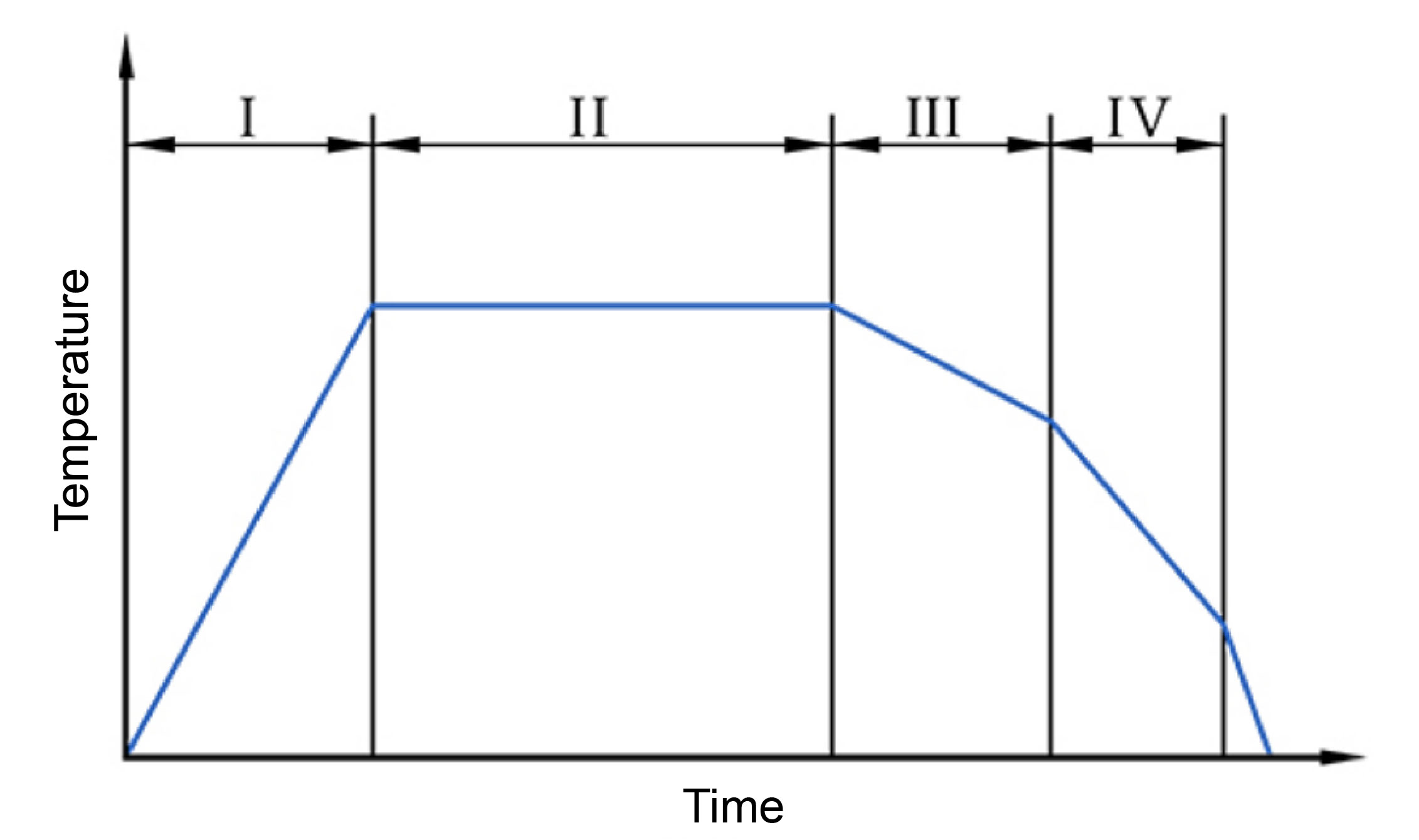
Fig.2 Four stages of the annealing process
Ⅰ: Heating phase; Ⅱ: Insulation phase; Ⅲ: Slow cooling phase; Ⅳ: Fast cooling phase.
For general industrial glass, the upper temperature limit for annealing ranges from 400 to 600℃, and is 50~150℃ higher than the lower temperature limit for annealing.
Based on the causes of internal thermal stress of the glass mentioned above, it can be assumed that the glass annealing is composed of two processes: the first is to weaken and eliminate thermal stress; the second is to prevent the generation of new thermal stress. Besides, temperature distribution inside the annealing furnace, the influence of inherent stress, thickness, and shape of glass products and other factors should be comprehensively considered, so as to formulate a more appropriate annealing plan.
Selected from New Edition of Glass Technology


Product: (86)-316-5970168/166/165
Other: (86)-10-63706370
E-mail: sctj@bhphoton.com